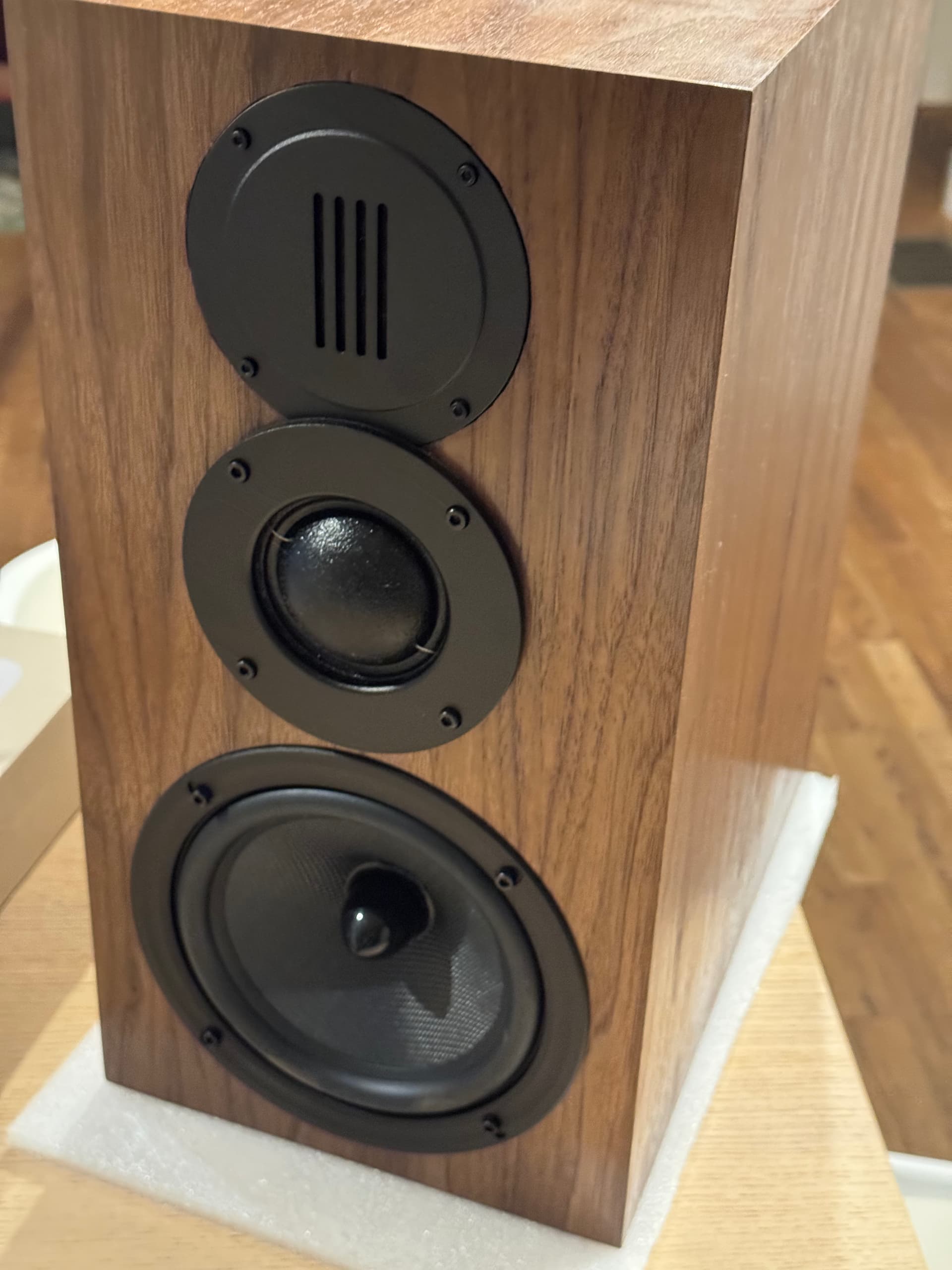
Hi all — first time measuring speakers, so I’m learning as I go.
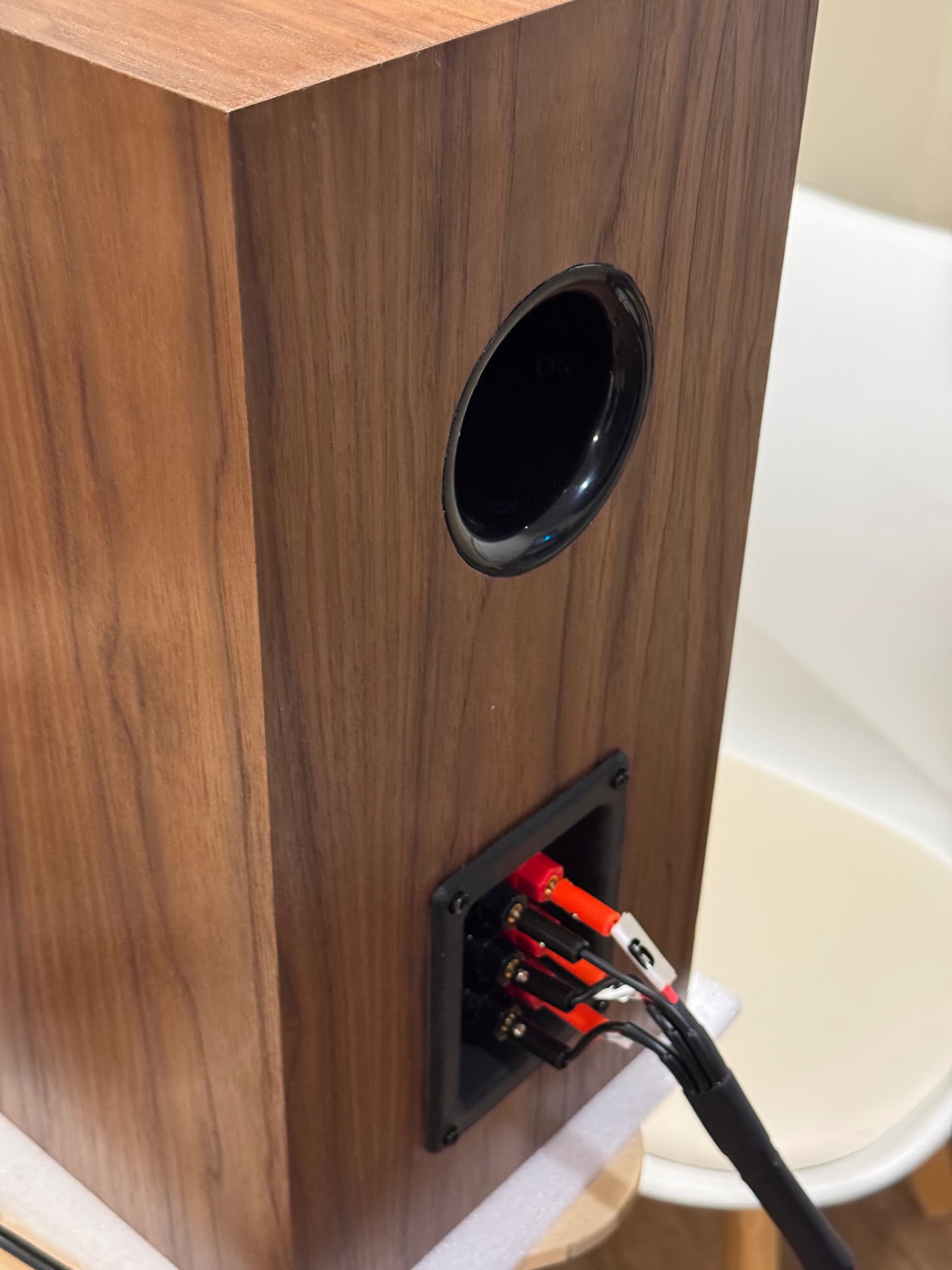
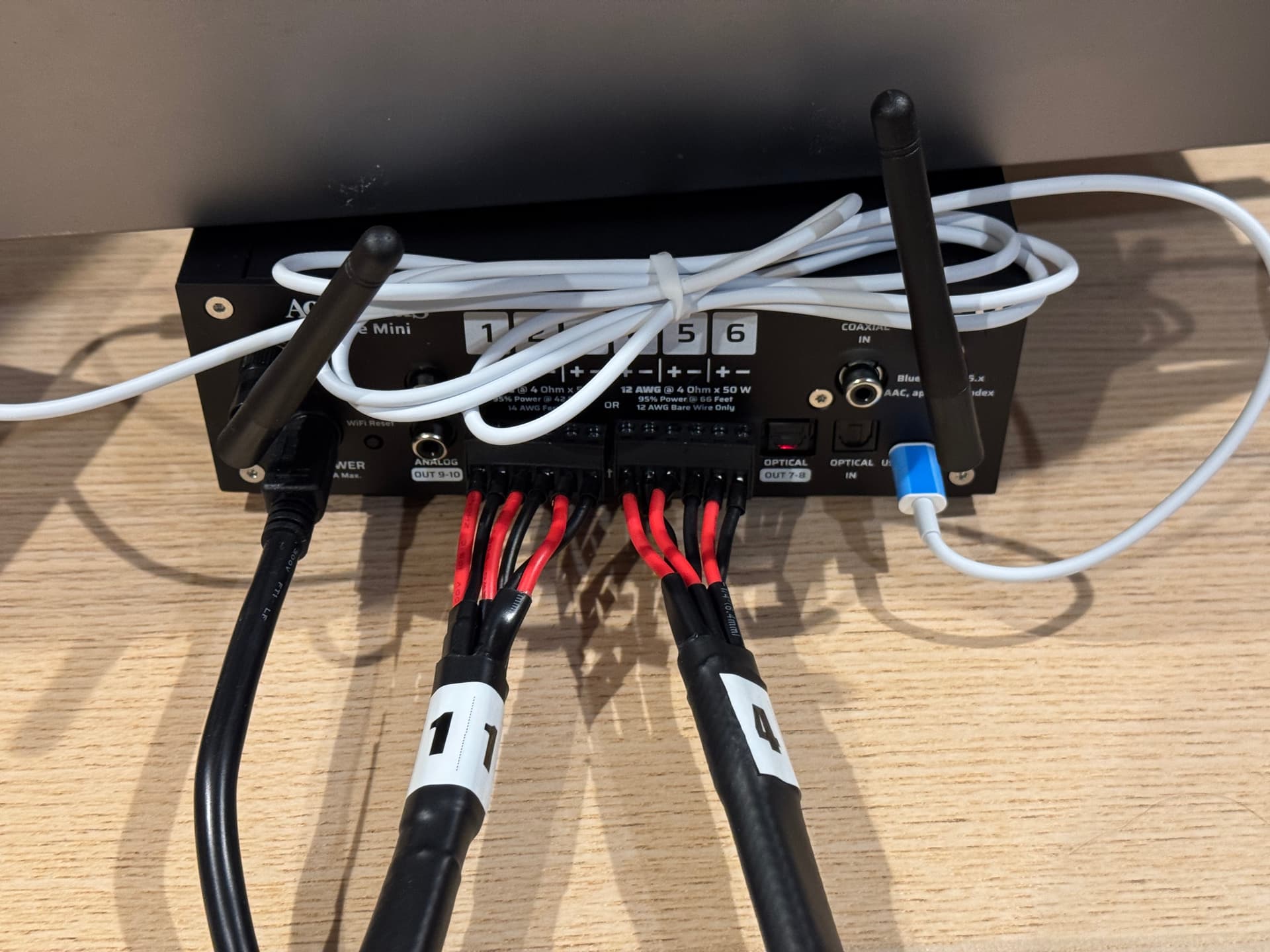
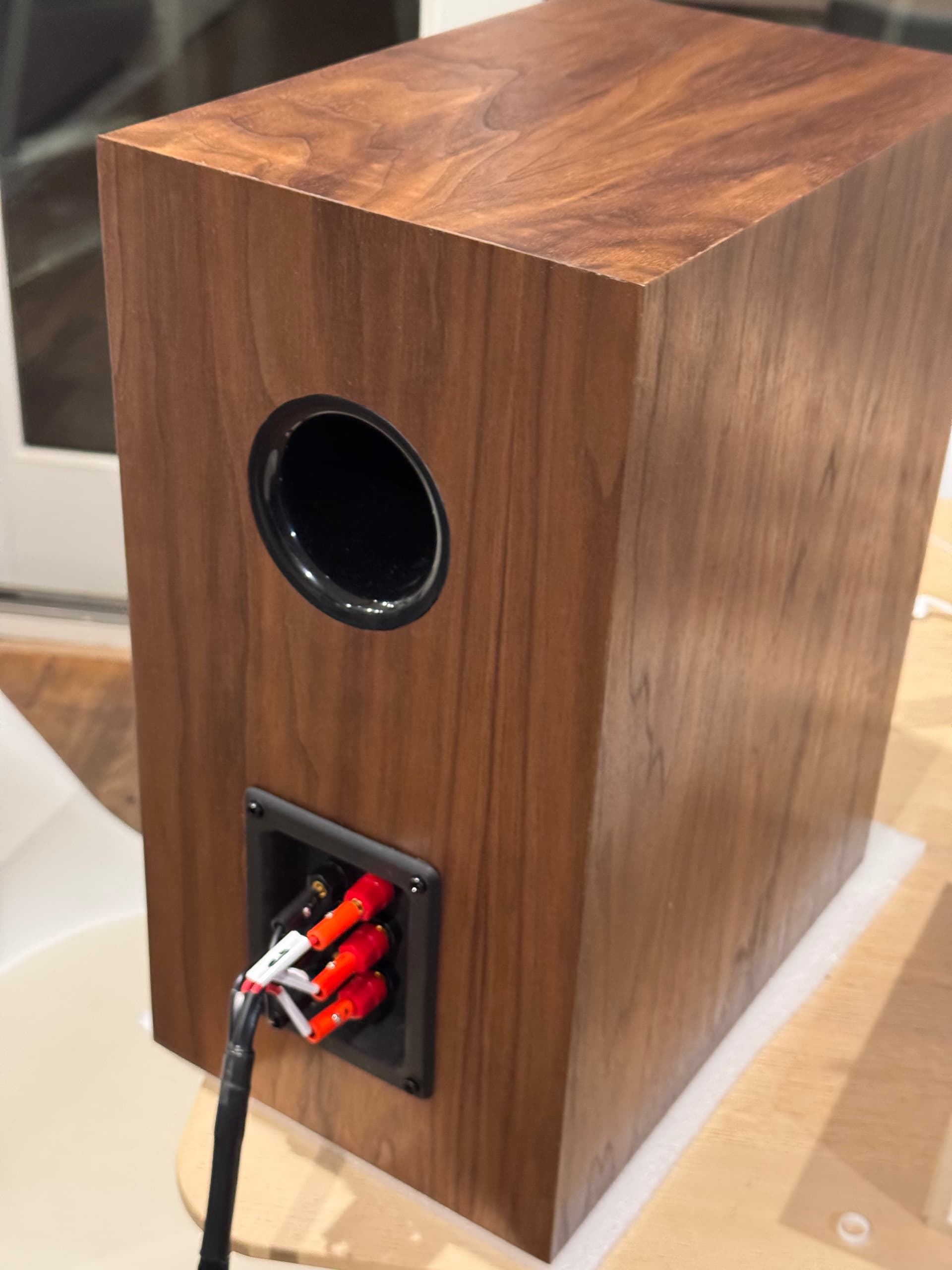
I just finished a pair of HiVi Swans 3.1-A and I’m driving them actively with an AC650. Each driver has its own binding posts and its own amp channel. Channel mapping:
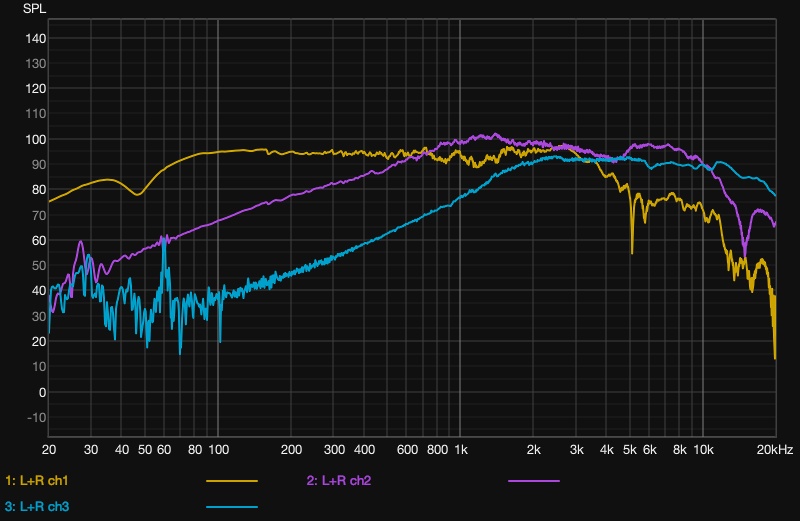
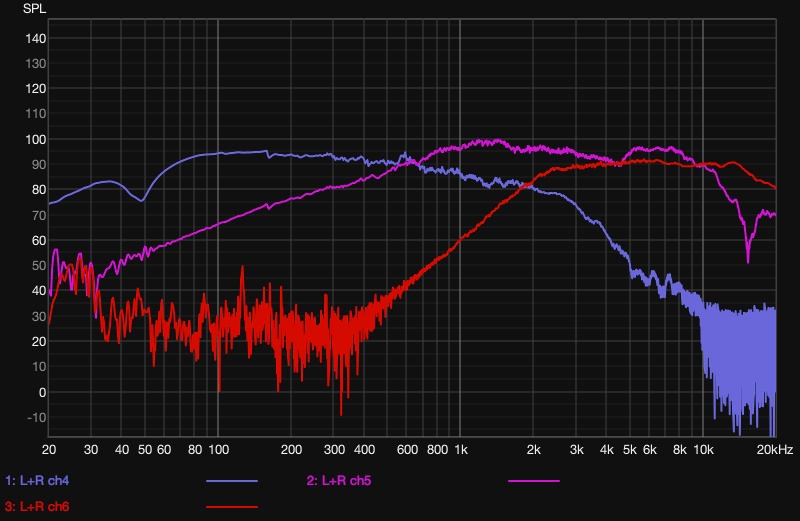
Measurement chain: UMIK-1 (with cal file), REW on a Mac. I set SPL around 76 dB and gain on the tweeter is set to –10 dB on the AC650. I measured each driver individually (the other two muted).
I ended up with slightly different-looking graphs between the R and L speakers. Could be user error in REW, but the “flat” regions look fairly consistent.
Proposed crossover points (first pass):
Woofer: low-pass ~1 kHz
Mid: band-pass 1 kHz – 2.5 kHz
Tweeter: high-pass ~2.5 kHz (“let the tweeter ride” above that)
Does this seem reasonable for these drivers?
What I’m looking for feedback on
Are 1 kHz / 2.5 kHz sensible starting points for this 3-way, or would you push the woofer-to-mid lower (e.g., 300–600 Hz) and/or the mid-to-tweeter a touch higher (e.g., 2.5–3 kHz) for better directivity and cone breakup avoidance?
Filter types/slopes: I was planning LR4 (24 dB/oct) at each handoff to keep phase straightforward — good plan for a first tune?
Measurement sanity checks: Any common REW gotchas that would explain the R/L differences?
Happy to post the .mdat or screenshots if helpful.
I am working on a similar 3 way project, but with different drivers. I personally believe your cross-over points to be a bit high in frequencies. You could try to lower yours to something like 250Hz, 250 Hz to 1 kHz and 1kHz….. Store your current settings, then maybe try with lower cut-of frequencies. You could measure those too, and A/B the results to a hearing test… I like to use my base as the real punchy bass speaker, have the midrange do a bit of bass as well (since I have a smaller cabinet, so to get more base out of the box)…..
Please realize that the 15 EQ’s are also per driver. You should set the 15 EQ’s per each driver. This way, you can take out more of the bass out of the tweeter, get a cleaner, purer midrange and take the high frequencies out of the bass speaker….. I got this observation, by looking at your graph’s. Fred
That’s interesting. Inverting changing the phase. Right? Is that because the Mid was wired out-of-phase or does it have to do with the physics of combining drivers?
I had everything absolutely correctly wired (in-phase), but still needed to invert the mid driver. Outside of the measurements, you also need to listen to the sound coming of the different drivers. I did not hear much sound coming -off the mid-range driver (not much sound in the mid range), I think the mid-range sounds coming from the high and low drivers were compensating for the mid-range sound from the mid -driver. So, I just TRIED to invert the mid-driver and oh my, a huge difference, I could now hear the midrange sounds and it now clearly coming from the mid-range driver. Also, if you listen to the UTube Pod from the Acoustus founder (Open baffle speakers), he also inverts the mid-range (even though he has everything wired correctly)…. Just try it and listen to the sound in the straight and the inverted mid range mode.
Maybe, a lot of this is unpredictable and needs to to be tried-out. Maybe your optimal (for your drivers) is not 1 kHz and not 250 Hz but 600 Hz…. Do try to experiment, you can always go back. And also don’t forget that you can furthermore adjust the responses with the 15 EQ’s PER DRIVER. Furthermore, to reduce distortion, I also used the EQ’s per driver for the clearly out of frequency range portions, and drastically reduced the out of range frequencies for the individual drivers, so as to not induce distorted sound coming from those drivers, in frequency ranges that are not supposed to be in play for those drivers. It will also better protect those drivers. I hope all this is helpful.
Thank you! Yeah, I am trying to get grasp on basics and there is a lot to learn. I spent a bit time trying to tune things last night. My original 1 kHz – 2.5 kHz had the woofers were booming moving 250 Hz - 1 kHz sounds lighter. I will continue to experiment.
Very cool speakers! The speaker cables look really good too.
I am looking at your measurements from the Right speaker and I like what you go there. I would probably crossover the woofer at 1k or 1.2kHz. Boost the base a little with the EQs or tone control around 100 or even lower. Then crossover from mid to high at about 6kHz. Bring down the volume of the mid and even more so on the highs. Then I would do a RTA measurement and play with the EQ slider in the Acoustas App for the woofers. First, you wanna zoom in a lot more on your low end and try to get it pretty flat. I would do this in the space were your speaker will live individually, and then altogether. You can tune to flat the woofer and then play with the tone control to find the kind of house curve you want to have and save it to a preset.
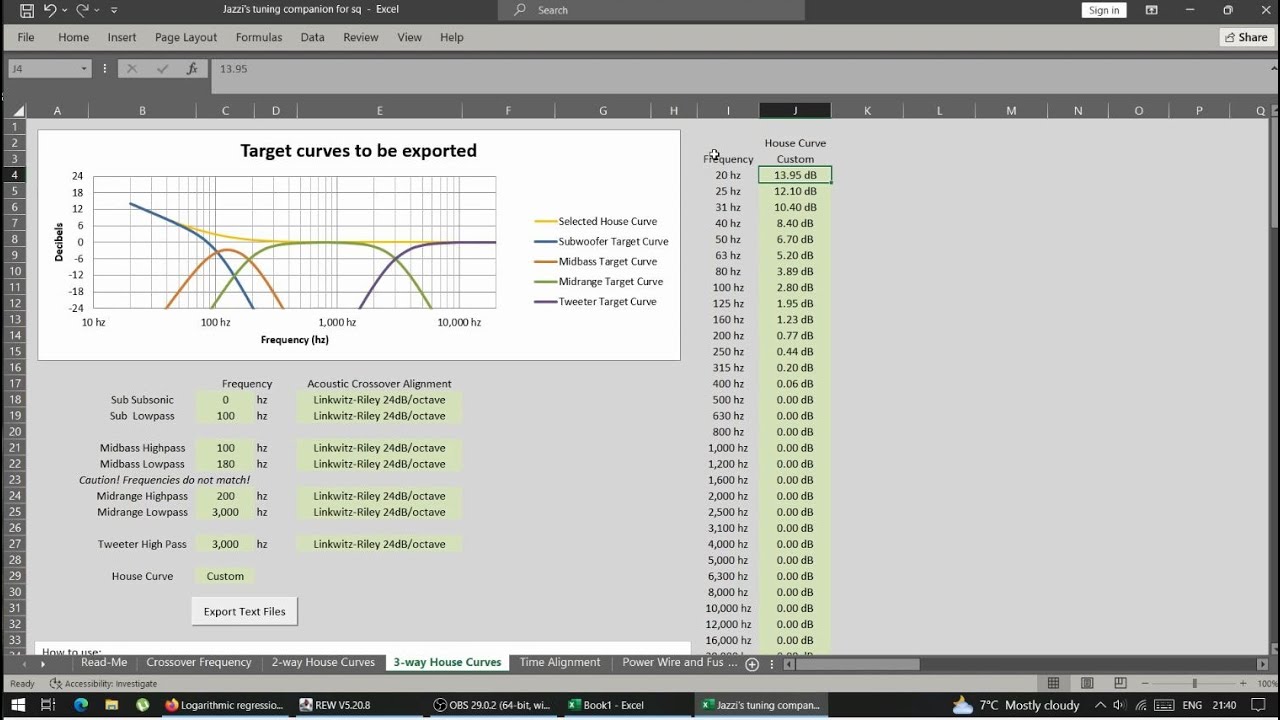
As far as house curves go I am currently playing around with the Jazzi spreadsheet. It is pretty handy. That should help you determine where to cross things over based on the kind of house curve you wanna have. In general, you just wanna boost your lows and lower your highs.
I prefer Harman style house curves to tune to with different presets for slight variations and sound preferences based on the recordings, volume and music type that work well in my room. The house curves I get from this:
Here is a video from RawCat that is very helpful but for car audio. It is very similar to what we are doing. I live a gradual slope lows up and slop down.